Viva Editions are books that inform, enlighten, and entertain. The very name, "Viva!", is celebratory. And while Viva Editions is a line of books that are as fun as they are informational, the intention behind Viva is very serious—these are books that are truly helpful and intended to enhance people's lives.


Showing posts with label excerpt of the day. Show all posts

Wednesday, August 8, 2012

Excerpt of the Day: "Better Than Great" by Arthur Plotnik


Sadly, in this "age of awesome," our words and phrases of acclaim are exhausted. Even so, we find ourselves defaulting to such habitual choices as good, great, and terrific, or substitute the weary synonyms that tumble out of a thesaurus - superb, marvelous, outstanding, and the like. The piling on of intensifers such as the now-silly "super," only makes matters worse and negative modifiers render our common parlance nearly tragic.

Until now.

Better Than Great is the essential guide for describing the extraordinary—the must-have reference for anyone wishing to rise above tired superlatives. Arthur Plotnik, the wunderkind of word-wonks is, without mincing, proffering a well knit wellspring of worthy and wondrous words to rescue our worn-down usage. Plotnik is both hella AND hecka up to the task of rescuing the English language and offers readers the chance to never be at a loss for words!

Take a look:


Great

-Extremely Good
-Prized
-In Excellent Shape
-Distinguished
-Of Worldly Perfection
-Rich in Virtues
-Smart

A Tough Word to Beat
Toward the end of the 20th century, the venerable word great reigned as the default term for describing specialty. Used at all levels of speech, the term never seemed to exhaust itself, even within a sentence. Major events called for pile-ups, something like, “This great float honors one of the great gentlemen of the great State of California, and tomorrow two great teams will play what’s expected to be a great game before the greatest fans in this great nation.”

Today, if the word doesn’t quite put listeners to sleep, neither does it wake them to the wonders of anything. Approaching some two billion appearances in a Web search, it certainly has lost whatever specialty it had. If two billion things are special, what’s left to be ordinary? In conventional uses, great generates about one nanowatt of energy. Lately the word amazing has become slightly more energetic than great, but it, too, is accumulating usage numbers that suggest serious loss of clout.

The problem is that great, considered by itself, is still a great word, understandably employed for more than a thousand years for a range of uses detailed across two pages of The Oxford English Dictionary. Force comes from its very sound, starting with a growl (gr), which can be drawn out, followed by its long-a attention-getter, and concluding with an emphatic dental mute, the t. Quick and punchy, it serves as both adjective and noun (“one of the greats”) and shifts easily to the adverb greatly.

The word’s early meanings of “thick” and “coarse” suggest its relation to Old English grytta (coarse-ground meal). Even if its grit has been chewed to mush in overuse, it can still be freshened by novel intensifying devices. At least that is the rationale for including, among our alternatives to great, suggestions for intensifying this worthy old utterance: a blitzkrieg of greatness, fist-pumpingly great, great served hot, greatness in high relief, and thwackingly great, to name just five of dozens.

What will the next hot modifier be? Hard to say; such terms slide in and out of fashion, emerging from standard synonyms, street-slang favorites, and pop-star locutions. “You look mahvelous,” intoned comedian Billy Crystal, and suddenly everyone was intoning it. Even tha shiznit got its run after Snoop Doggy Dog rapped it, never mind its etymology. But the zing of any term fades after the first few thousand uses and even faster among youth subcultures. Campus superlatives such as bonus, core, key, or summit? So 20th century. The once-hot teen superlatives phat and fetch? So yesterday for teens (though still in play for the rest of us).

Fading or not, certain acclamatory terms—great, amazing, brilliant, terrific, and wonderful among them— continue to serve as what Stuart Berg Flexner described as “blurred words”:

“… used quickly and without much thought, almost as
automatic responses, because they are easily available….
The words are not always precise, which is one reason
we like them so much…. [We] avoid arguments and fine
distinctions we would rather not make.”
—Listening to America

But Flexner notes that while the words are imprecise, “we do want them to be forceful.” Unfortunately, wanting does not do the job. For serious word users, it is invention, experimentation, discovery, and open-mindedness that puts the grrr back in terms of acclaim.

Monday, August 6, 2012

Excerpt of the Day: "Drunken Angel" by Alan Kaufman


Son of a French Holocaust survivor, Alan Kaufman drank to fill the huge hole in his heart, wrecking himself and everyone in his path.  In Drunken Angel, the poet and critically acclaimed writer recounts with unvarnished honesty the story of the alcoholism that took him to the brink of death, the PTSD that drove him to the edge of madness, and the love that brought him back.  Kaufman minces no words as he looks back on a life pickled in self-pity, self-loathing, and guilt, delivering a lacerating, cautionary tale of a life wasted and reclaimed.

Have a look:

Chapter 82

Why an angel? Because I believe that, in time, that is what we become in sobriety, if we last long enough, to the end. Not the winged kind, no. Not some haloed cupid or sword swinger but a kind of flawed angel, without wings, that belongs to no religion but rather to a species of human heartbreak unlike any other known.

Alcoholics and addicts are unlike any other people I’ve ever met. I am unlike most people. A blazing mutant of some kind. A wondrous freak. In my mind lurks an urge that will be with me to the end, to put a bottle to my lips and drink myself to death. A judge and jury that I wake up to each morning has pronounced a verdict of guilt on me for no crime that I have committed, just for being alive, and has sentenced me to death, not by guillotine or rope but by a single drink.

It is the strangest thing, this sentence of death, this disease I have which tests me to the max and each day holds my existence accountable to the very universe, a god no religion can know as we drunks know it.

A god of drunks who goes with us into our prisons and gutters, bedrooms and businesses, flophouses and alleys, hospitals and mansions, and patiently waits with hand on our shivering shoulders as we groan through yet one more night of near death, waits to see if maybe this time we’ve had pain enough, loss enough, enough hangover, illness, fear, to ask for help.

And yet many cannot ask, and die right before the god of drunks, who I think must weep helplessly when this occurs. So many lose heart and fall. I have seen so many of my brothers and sisters in recovery fall. I have seen so many beautiful people die. The poet found in his room OD’d with a needle in his arm. He was my best friend. The twenty-year-old drummer who killed himself over a romance gone wrong. Nice kid. The young artist who drank and was found murdered in her Tenderloin hotel room. She was so talented. The buddy who drank and wound up facedown in a river in Pennsylvania, drowned. The ones, so many, who jumped off the bridge or the roof or put a gun barrel to their heads and squeezed the trigger, or in private ate painkillers until found on the floor brain-dead, or perished young of a destroyed liver. That young nurse, a mother of three, who had everything, beautiful children, loving husband, looks to die for, a house with two cars in the garage, who also had this little problem that she couldn’t stay sober or stop smoking crack, no matter how many meetings she attended or what advice she tried to follow, and one day returned home to that garage, ran a hose, turned on the ignition, and gassed herself to death.

When you have seen as much of that as I have in my sobriety, in the last twenty years, how can I not regard my own reflection with amazement that I am still here. Why me? How did I get so lucky? Really, I don’t know. I want to think that I’ve done something right, but in truth, I know better. I do believe in a Higher Power and I do work the 12 steps and go to meetings and work with drunks of every kind and description, yet it doesn’t seem like enough, it never does. I never feel that I can repay what has been given to me. The love that has been shown. The patience and straight-shooting counsel that has saved my butt time and again. I have met in recovery men and women who are the greatest human beings I have ever known but don’t want their names advertised. Anonymous, quiet angels, invaded by death, propelled by light, who move among us with quiet grace and private suffering and seek each day to help those around them without fanfare or reward.

Friday, August 3, 2012

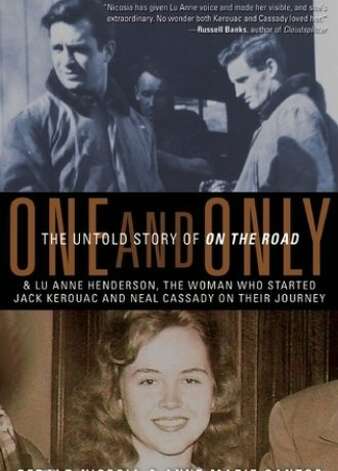
Excerpt of the Day: "One and Only" by Gerald Nicosia and Anne Marie Santos


Gerald Nicosia and Anne Marie Santos’ One and Only tells the story of Lu Ann Henderson.  At 15-years-old in 1946, she met Neal Cassidy, fast-talking hurricane of male sexuality and vast promises.  The two married and soon were hanging out with a group of young would-be writers, including Jack Kerouac and Allen Ginsberg.  Lu Ann become the secret link between Kerouac and Cassidy, helping to ignite the Beat Generation and giving Kerouac material for one of the seminal novels of the twentieth century, On the Road.

Take a peek:

From Part One
Lu Anne:

It all started in October 1946. That’s when we took our first trip to New York. Neal and I sort of ran off from Denver because of what happened between Neal and a girl named Jeannie Stewart. She was this girl Neal had been living with when Neal and I met, and she was holding his clothes as a weapon to get him to come back “where he belonged.” She wanted to keep him at her house, and he told her that he wasn’t going to do that. So Neal and I went to her house, and he climbed up three stories and broke in the window, and rescued his clothes and books. His books were the most important thing to him at the time.

We ran off without anyone even knowing, just took off hitchhiking, and we wound up in Sidney, Nebraska, where I had an aunt and uncle living. In Sidney, Neal got a job as a dishwasher, and I got a job as a maid—making twelve dollars a month! When I think back, my God! What child slavery they practiced in those days! They really did. One day off a month—that’s all I got. I had to be up at five in the morning and have the whole bottom part of the house cleaned by the time the family got up at seven, and I finished at seven in the evening. But it all came to an abrupt end very soon.

It was just getting into winter, and we were having our second snow already. The woman, Mrs. Moore, had me out on this veranda scrubbing everything—the railings, even the side of the house. Neal happened to come home that day and saw me scrubbing this idiot thing—he saw that my hands were turning blue. He said, “That’s it!” So that’s when he took my uncle’s car. He just told me he was gonna get a car—he didn’t tell me where he was gonna get it or anything. I almost died when he drove up in front, thinking what I would have to face with the family. But, in any case, we took off at midnight.

I only had one trunk, and we loaded it into the car. It was a wild ride, let me tell you, because the whole windshield was completely iced over, and the windshield wipers wouldn’t work! And of course, Neal always had a terrible fear of the police, so he had me looking out the rear window to see if we were being chased. Since my uncle worked at the railroad, Neal had no idea when he might discover it and turn it over to the police. My uncle would have had no way of knowing it was Neal and I who had taken his car. Whether that would have made any difference in his going to the police I don’t really know. In any case, Neal wound up on the passenger side, driving with his left hand, looking out the window with this scarf tied around his head, and me looking out the driver’s side because all the windows were totally iced up—to see if anyone was following.

I’d never gone through anything like that in my life. My father was a policeman, and I’d grown up with policemen. I had no fear of policemen at all. They were part of me, you might say. But between Neal’s fright of the police and my own fright of my uncle—my fear of being found out by the family, that I would have done such a thing—we were both pretty much out of our heads. We drove the car off the road a few times, and finally it went completely off the road, and he couldn’t get it started again. We’d made it to another small town in Nebraska—I can’t remember the name—but not too damn far from where we’d started. Maybe a hundred miles or so. It seemed like we’d been driving for hours—most of the night. We had intended to drive to this friend of Neal’s, Ed Uhl, whose family had a ranch near Sterling, Colorado. Neal told me we were gonna go to Ed’s and stay the night, and then have Ed drive us to Denver. We really had no idea at that point that we would end up in New York.

Wednesday, August 1, 2012

Excerpt of the Day: "Apocalypse Not" by John Michael Greer


New Agers are counting down the days until the Mayan calendar ends in 2012. Evangelical Christians long for the Rapture. Extropians dream of the Singularity, when computers will surpass human intelligence and technology will transcend all limits. Doomers stockpile freeze-dried food as they wait for civilization to crash and burn around them.  What do they all have in common?

They’re all wrong.

For almost 3,000 years apocalypse prophecies have convinced people all over the world that the future is about to give them the world they want instead of the world they’ve got. John Michael Greer’s Apocalypse Not is a lively and engaging survey of predictions about the end of the world, along with the failed dreams and nightmares that have clustered around them.

Have a look:

A strong case could be made for the idea that storytelling is one of humanity’s oldest and most powerful technologies. As soon as the extraordinary gift of human language finished emerging out of whatever forgotten precursors gave it birth, hunters back from the chase and gatherers returning with nuts and tubers doubtless started describing their day’s experiences in colorful terms, and their listeners picked up more than a few useful tips about how to track an antelope or wield a digging stick: the glory of the impala’s leap and the comfortable fellowship of gatherers working a meadow together wove themselves into the stories and the minds of the audience, and helped shape their experience of the world. Stories still do that today, whether they’re woven into the daily news, dressed up as religious or secular ideology, or in their natural form as stories one person tells another.

Some of these stories are very, very old. Most of the stories that people nowadays call “mythology,” in particular, have roots that run back far into the untraceable years before anybody worked out the trick of turning spoken words into something more lasting. Read through the myths of every culture and you’ll find certain themes repeated endlessly: stories of a golden age or paradise back in the distant past when things were much better than they are now; stories of a worldwide flood from which a few survivors managed to escape to repopulate the world; stories of terrible monsters and the heroes or heroines who killed them; stories of heroes or heroines of a different kind, who died so that other people might have a more abundant life—all these and others are part of the stock in trade of myth around the world, shared by peoples whose ancestors, at least until modern times, had no contact since the end of the last Ice Age.

Some modern theorists, starting from this evidence, have argued that these core themes and the stories based on them are somehow hardwired into the human brain. This may or may not be true—the jury’s still out on the question— but it’s definitely the case that most of the themes of mythology appear on every continent and in every age. If they were invented, the event happened so long ago that no trace remains of the inventor or the time and circumstances of the invention.

The apocalypse meme is one of the few exceptions. Hard work by a handful of perceptive scholars, most notably historian of religions Norman Cohn, has traced it back to a specific place, time, and person. The place was the rugged region of south central Asia that today is called Iran, the time was somewhere between 1500 and 1200 BCE, and the person was Zarathustra, the prophet of the religion now called Zoroastrianism.

Monday, July 30, 2012

Excerpt of the Day: "Seal It with a Kiss" by Violet Blue


Get your kiss on with Violet Blue's Seal It with a Kiss, a guide to all the different ways to kiss and the varieties of techniques to perfect your very own style. No matter if you're a novice kisser or a kissing bandit, discover all the dos and don'ts in this adorable little volume devoted to making out.

Have a look:

Chapter 1
The Secret Society of Kissing Artist

The average woman spends two weeks of her life kissing—but what girl wants to be average? Two weeks of smooches just won’t do—especially when you want to be the kind of kisser who has them coming back for seconds. And thirds. Maybe an all-you-can-kiss make-out buffet. With the secrets, tips, techniques, and detailed steps to becoming a master kisser in this book, you’ll be more than the average player: you’ll be at the top of the kissing game.

Kissing is one of the most sensual of all the acts of flirting, foreplay, seduction, and sex we can enjoy. In a kiss, you use all of your senses—and his too. You feel a kiss with your body, your heart, and your mind. You can communicate desire, urgency, caring—anything you want, because what you’re feeling when you kiss someone can be channeled right through you like an electric charge. The greatest kissers know a variety of techniques that can be applied to a range of situations, tricks to make their kisses unforgettable, strategies to seduce even the shyest pair of lips, and how to jump-start that erotic spark with a first (or second, or third) kiss.

The sensual kisser has a lot more going on than a pair of kissable lips—though I’ll tell you all about making your lips silky smooth and utterly irresistible in a bit. A truly sensual kisser is a girl who feels confident and sexy from within, no matter whether she happens to think she looks “perfect” at the moment, and a great kisser stays in touch with all of her senses—before kissing even begins. It’s like flipping a light switch: when you know a kiss is about to happen, all of your senses sharpen. And once the kiss starts, everything goes into overdrive as you drink in the taste, the smell, the touch, the sound, the feelings. And the person on the receiving end is hooked.

What’s in a Kiss?

Kissing is a single act that can convey a wide variety of intentions. For instance, one type of kiss, a light, affectionate peck, is a message of tenderness—it can be nonsexual, or a loving reminder. On the other hand, a first romantic kiss, built up to with nervousness and desire, might begin with the softest touch and pull you together like a red-hot magnet. A kiss between lovers is the spark that ignites passions into a blazing fire that may consume you both in a delicious makeout session. This kind of kiss can be more powerful than the need to eat when you’re famished. Sometimes the prelude to a kiss is the best part; other times it’s only a teasing, playful beginning.

One kiss can change everything. It can make friends into so much more. A kiss is the moment when sex and science meet, when we know whether our chemistry matches our desire. A casual encounter might turn into a pivotal, life-changing moment, after which ordinary everyday situations with your friend become lustful encounters. Often, when we kiss someone for the first time, we know instantly whether or not we click with them sexually.

Kissing is also really good for you and good for everyone around you. The act of kissing makes you feel emotionally ecstatic—it stimulates the release of endorphins, natural opiates similar to the delirious rush we feel while running and when we fall in love. Prolonged sensual kissing releases the arousal hormone oxytocin, essential for orgasm. And it’s good for our teeth, because the increased flow of saliva washes our teeth in a plaque-dispersing bath. Now, doesn’t that sound sexy?

Most of all, kissing is fun. Welcome to the world of kissing bandits and superkissers, where you’ll learn how to cast an unforgettable, seductive spell with your lips. You’ll join the legions of women who can melt a man like butter with a kiss, are always the first ones picked for the kissing booth, and can easily become rulers of small countries with their ability to deliver the perfect kiss anywhere, anytime. The tips in this guide will make your past experiences with kissing seem like amateur night, and already-great kissers will find more secret kissing weapons, tips, and tricks to fortify their arsenal of techniques. Here you’ll discover can’t-fail techniques for ramping up your sensuality, the keys to perfect first kisses, the fine points of timing a kiss, oodles of techniques and surprises, and how to make an innocent kiss turn into a lustful session of tonsil hockey.

You don’t need to be a man-eater or a villainous vixen to deliver the most wicked smooches—though all skill levels are encouraged to apply. Perhaps you’re tired of being a one-date wonder or feel that you’ve missed far too many kissing opportunities. Or maybe you’re a would-be kissing virtuoso, coiled up and ready to spring. Maybe you’d just like to know when and where different types of kisses are appropriate, how to be a better kisser, how to become a more magnetic kisser, or you want to learn new kissing techniques to make your sweetie give you—and your kissable lips—a double-take. This guide gives you concrete tools to nurture your kissing prowess, useful for a lifetime of being a first-rate, unforgettable kisser.

Monday, July 23, 2012

Excerpt of the Day: "The Frugal Foodie Cookbook" by Lara Starr and Lynette Shirk


Eat better for less?  Sounds crazy, right? The Frugal Foodie Cookbook will help you do just that.  Lara Starr and Lynette Shirk have packed this book with hundreds of delicious recipes and expert advice to help you save both your wallet and your sanity.

Take a peek:

Cents-able Solutions:

Meal Planning 101
You can avoid both overshopping and undershopping by setting aside a few minutes over the weekend to plan out your meals for the week. There are countless benefits to meal planning. You won’t find yourself roaming the aisles desperate for inspiration for the evening’s meal, and you won’t be tempted by the expensive prepared foods in the in-store delis. And when you buy what you need for the week, you’ll save time and money on midweek trips to the store.

Dinners
On the day you do your shopping, make a list of the dinners you’ll have for the week, including the main dish and any veggies and sides. If you’re making a “big dish” like pasta or a roast, you can slot in “leftover night” as well. Then, make a grocery list of all of the items you’ll need to prepare the week’s menu. You’ll know exactly what you need and don’t.

Post the week’s menu on the fridge, and save them up for a few weeks—you’ll build a repertoire of your family’s favorite dishes.

Lunches
Most kids are happy to eat the same thing over and over again, but neither man nor child can live on peanut butter and jelly alone. Foods like pizza, quesadillas, and even homemade chicken nuggets are perfectly palatable to kids at room temperature and make great lunches.

To keep yourself sane and your kids healthy and happy, make a five-day menu that can be repeated week to week. Monday could be pizza day, Tuesday bagel and cream cheese day, etc. Supplement the main dish with fruit or cut-up veggies and something crunchy, like crackers, dry cereal, pretzels, or rice cakes. These “sides” keep well and are easy to grab if junior wants to dip into his lunchbox at recess.

Breakfasts
Weekday breakfasts are usually quick affairs. Save your big cooking guns for the weekend, when you can make waffles, pancakes, and quiches that can last for several meals. It takes only minimally more time and trouble to make two quiches than to make one, and you’ll have a hearty slice of eggy goodness ready for weekday breakfast.

Wednesday, July 18, 2012

Excerpt of the Day: "Help! My Baby Came Without Instructions" by Blythe Lipman


Make no mistake, babies are precious.  With their cute little noses, teeny tiny toes, eyes full of wonder, and infectious giggles, these little bundles can bring you hours of joy and entertainment.  But for a new parent, bringing home a baby can be the scariest day of his or her life.

It doesn’t have to be. 

Help! My Baby Came Without Instructions is a truly useful how-to that will have nervous new moms and sleep-deprived dads feeling confident about their parenting skills.  Blythe Lipman has devoted her life to the gentle art of infant care and offers wise and witty practical advice in this parent-tested, expert-approved book.  Rest easy, new parents, help is here.

Take a look:

Slip and Slide
The safe, fun way to bathe your baby

Bathing can be very scary for your new baby. Once the water hits her little body, it is a whole new experience of slipping, sliding, and squirming. Here are a few tips to make Bath Time 101 a bit easier.

-Before you fill up any kind of tub, have the baby’s towel (and all other supplies you might need) next to the tub.

-Fill the tub or sink with enough water to cover the baby’s tummy. Before you put your baby in the water, test the water temperature with your elbow. It should be warm to the touch.

-Make sure all the windows are closed and fans are turned off. The room should be free of drafts.

-Take the baby’s diaper off last. Naked babies (as you will learn probably sooner than later) go to the bathroom anyplace. Don’t be alarmed if she goes in the bath. This is very natural but sometimes frustrating when you have to start all over.

-Wash from the bottom of the toes up to the head. Some babies don’t like having their hair washed. Starting with tears is not fun.

-Buy Summer Comfy Baby’s Safety Foam Bath Sponge, by Summer Infant, a rectangular sponge with indentations that look like the baby’s body. This sponge will fit in the bathtub or a large sink. Fill the tub or sink with enough water to cover three-fourths of the sponge. Put the baby on her back so you have both hands free to soap, wash, and play. You can find this sponge at Babies “R” Us, Target, and Walmart, as well as online.

-Use a small plastic baby tub that will fit into your large tub. They make these tubs with fabric attached to the top (like a hammock), extending from top to bottom on a slant. The baby’s bottom is submerged in the water and the rest of her body is partially covered. You still need to support the baby with one hand, but you don’t have to worry that her head will go under the water.

-Or put a large towel in the bottom of the sink and fill it with a few inches of water. While you support the baby’s head and body with your hand, the towel will prevent her from sliding.

-When the baby can sit up, purchase a plastic bath chair. This seat attaches to the bottom of the tub with suction cups.

-When washing the baby’s hair, hold a washcloth in front of her eyes while you rinse, to keep them dry and shampoo-free. Gently tilt the baby’s head back and rinse using a plastic cup filled with warm water.

-There’s even a product that looks like a circle of soft plastic, almost like a sun visor, that attaches around the back of the baby’s head with Velcro. This hat fits on top of the baby’s head so you can pour water to rinse the shampoo away without it getting into her eyes.

-Picking baby shampoos or bath products is personal. Some contain aloe, lavender, roses, and conditioner together with shampoo, baby wash to relax the baby, and so on. Try them all until you find one that you and she like.

-Bubble bath sometimes irritates the baby’s skin. As an alternative, if you want to make bubbles, pour a small capful of shampoo under the running water.

-The bathtub is a great place to blow bubbles with a wand, for the baby to play with.

-Take the baby out and put her onto a big towel, wrap her up, and give her a kiss.

-If you use powder, pour it into your hand first, then rub it on the baby. Never shake it directly on her body, as it could get into her eyes, nose, mouth, and lungs.

-Don’t forget to have fun washing, singing, and playing. There is nothing cuter than a squeaky-clean baby to make you smile.

Monday, July 16, 2012

Excerpt of the Day: "Total Flirt" by Violet Blue


Did you know there are two types of flirting?  Have you ever wished you could “just tell” if he was interested in you?  Whether you’re tired of waiting for your chance or you want to play for higher stakes, Total Flirt will teach you the tools of the flirting trade—and sexy secrets no girl should be without.  Under Violet Blue’s wise and helpful tutelage, readers learn how to walk like a siren, talk like a bombshell, and seduce like a vamp — and even do it all online!

Have a look:

The Flirting Game: Two Ways to Play

Flirting is a game that no girl should ever wait to play: you can play now or later, but flirting is too much fun to let the party pass you by. And besides, the legions of flirt fatales who enjoy the fruits of guys on tap could always use another talented secret agent to join in the quest for world domination (or the snaring of the sweetest heart in the sexiest package to keep all to herself).

The first step in our master plan is understanding the concept of flirting. Guys see girls who flirt in a number of ways: cute, sweet, annoying, sexually available (most guys mistake female attention for sexual interest), scary but exciting, thrilling, and slutty, or they’re relieved not to be guessing whether you’re interested at all. In later chapters you’ll find out how to navigate all of these situations and turn them to your advantage, even if that turns into “get me outta here!”

The most important thing to know about the concept of flirting is that there are two ways to flirt. There is flirting for fun, and there is flirting with intent. Flirting for fun is when you use all those wickedly wonderful smiles, teases, eyelash bats—many but not all of the flirting skills detailed in this book—for a playful tête-à-tête with someone you think is cute but who is off the menu. They may be off the menu for a variety of reasons: because he has a girlfriend (naughty you!), or she’s a friend of a friend, or he’s your gay pal who flirts back with feeling and fun. You don’t mean anything when you flirt for fun, except to feel saucy and make your friend feel the same. It’s reserved for people who feel safe to flirt with.

Flirting with intent is when you flirt with a goal. Your “flirtee” is your prey, and you are the huntress. Flirting with intent is a lot of fun; it’s when the person you flirt with could be more than a friend, and you want to find out what that “more” looks like. You are sure it looks sexy, and will look good on your arm. Flirting with intent is how we scope for dates and mates, and while it’s not uncommon to go from “fun” to “intent” in the span of a few beverages, usually when we’re going out to flirt with intent a conquest of some kind is already on our to-do list. It’s when you flirt and you mean it.

Flirt fatales in the know already know this: flirting for fun and flirting with intent don’t look or sound very different to your flirt target. Even when flirting with intent, our manner is playful and teasing. We may in fact be engaged in a serious attempt to assess someone’s suitability as a potential date—and to advertise our own perfectness for this position—but we do not conduct this mate-selection process like a job interview. We exchange glances, smiles, jokes, compliments, and touches, not résumés and experience. (No, never experience, ahem.)

Use the valuable tips in this guide to help you cultivate the perfect Flirt Mode for your goals. This guide is designed to help you meet your goals and avoid confusion. The initial stages of flirting with intent can look a lot like flirting for fun—and this similarity can be a source of confusion and misunderstanding.

Researchers have found that two-thirds of all flirting is initiated by women. Did you know? Get down with your bad self! Girl flirting is done so subtly and unobtrusively that most people think men take the initiative with sexual cues. Women use subtle cues and signals so discreetly that men are not consciously aware of them and so men usually believe they have made the first move. Many studies show that men are not consciously aware of female flirt signals to which they are clearly responding. You can call the shots anytime you feel like stepping into the game. So even if you come across a “pickup artist” who thinks he’s “always closing the deal” when he’s chatting you up—this guide will keep you on top of the flirting food chain, right where you belong.

Friday, July 13, 2012

Excerpt of the Day: "Wordcatcher" by Phil Cousineau


Phil Cousineau’s Wordcatcher is a logophile’s dream.  250 words, each with a delightful back story to keep you entangled in etymologies, what’s not to love?  And, who knows, perhaps this treasure chest of remarkable words will encourage you to start your own wordcatching journey.

Take a look:

Arachibutyrophobia
The fear of peanut butter sticking to the roof of your mouth. Curious, right? Every time I read or hear the word I think of spiders, from the Greek arachne. But it’s really a very long and potent word for a very peculiar phobia, stemming from the Greek arachi, a glutinous oil present in peanut butter; butryo, to stick or adhere; and phobia, fear. As someone who has been afflicted with esophageal and swallowing problems all his life, I can swear to what appears to be a universal fear of getting something stuck in the throat. So it’s not difficult to imagine someone, especially with a peanut allergy, being terrified of its buttery version clogging up her mouth. The problem is mythic, a larger-than-life fear, or phobia—a word that can be traced back to Phobos, son of Ares, god of terror, but the symptoms are real, persistent, an unrealistic fear that seizes the whole person, resulting in symptoms of nausea, dizziness, and shame. That said, there is no shortage of curious phobias, such as: erythrophobia, the fear of blushing; ablutophobia, fear of washing or cleaning; euphobia, fear of good news; chromophobia, fear of color; gnomophobia, fear of gnomes; catoptrophia, fear of mirrors; Venustraphobia, the fear of beautiful and alluring women; kakorrhapphiophobia is the fear of failure and hippomonstrosesquipedaliophobia, fear of long words, and perhaps longer definitions. Speaking of frightful words, a curious fear I’ve suffered from on occasion, especially on long airplane flights, is abibliophobia, the fear of not having enough to read. To be fair, let’s conclude with an antidote of a word, counterphobia, which refers to “the desire or seeking out of experiences that are consciously or unconsciously feared.” It’s not unlike the advice your mom gave you after your first bad fall from a bicycle—climb back on.

Argonaut
A bold and daring sailor. A smooth-sailing word that combines the ancient Greek argos, swift; the beauty of a fine ship, naus; and the sailor courage of a nautes. They merge in Argo, the galley on which the Argonauts set sail, which in turn was named after Argus, its ingenious builder. Webster’s succinctly defines an Argonaut as “any of a band of heroes who sailed with Jason in quest of the Golden Fleece.” I vividly recall my father’s Heritage Club edition of the book by Apollonius of Rhodes, Argonautica, which we read aloud as a family over one long Michigan winter. The legend recounts how Jason persuaded forty-nine sailors to accompany him on a perilous mission from Iolcos to remote Colchis, in what is now Georgia, at the far end of the Black Sea. Their mythic task was to capture the golden fleece, which hung on a sacred oak guarded by a fire-snorting dragon. Curiously, in 1849, many of those who left home and hearth for the California gold mines were called “Argonauts,” in honor of Jason’s adventure, as well as “’49ers,” an uncanny echo of the forty-nine sailors who traveled with him in search of the resplendent wool. The Argonauts adventure lives on in Argos, a constellation in the northern sky; Captain Nemo’s ship, the Nautilus, in Twenty Thousand Leagues Under the Sea; the spiral-shelled nautilus, which the ancients believed sailed underwater; and nausea, seasickness, from naus, ship. Another haunting echo of the word is found in one of the most touching scenes in all of literature, from the final book of the Odyssey, when the hero returns home to Ithaka after his twenty-year long adventure and is recognized by his faithful dog Argos— who wags his tail, then dies quietly.

Wednesday, July 11, 2012

Excerpt of the Day: "Every Day Love" by Judy Ford


Falling in love: easy

Sustaining love: well, it’d be easier to complete a triathlon ten times over.

We long for love.  It’s a universal want.  But for some of us, sustaining love is difficult.  Counselor and author Judy Ford’s Every Day Love can help.  Filled with stories and experiences that are often overlooked as insignificant, this book sheds light on how to avoid pitfalls and celebrate the differences between yourself and your love.

Take a peek:

Not Easy Being a Sweetheart

You’ve probably experienced how your sweetheart can bring out the best in you and the worst in you? In the morning, sharing the paper, sipping coffee, making pancakes for the kiddies, looking forward to the evening out together—content and optimistic—all is right with the world. Your kids are smart and cute, your husband’s smart and cute, and you’re feeling on the smart and cute side yourself. In those smart and cute moments your heart swells up so big that you think it might burst.

Later it’s a whole new scenario. The kids make sandwiches, spill ketchup on the floor, leave crumbs on the counter. Your husband decides to remodel the bathroom. You’re glad to get the project started but secretly question his timing. Proud for showing restraint and not wanting to stir up trouble, you squelch your observations. But two hours before you’re scheduled to go out he’s still tearing down a wall and removing the sink.

“We have reservations across town,” you say. “Aren’t you going to get ready?”

He doesn’t respond.

“Are you going to get ready?” you ask a little louder. Still, no answer. To get his attention, you call his name. Firmly.

“What?” he answers.

“Why do you always do this?”

“Do what?”

“Why do you squeeze everything in at the last minute?”

“I thought you wanted me to remodel the bathroom.”

“Not when we have plans,” you snap.

“What’s your problem?” he snaps back. “There’s plenty of time.”

Next thing you know, you’re crying and slamming the door. “Geez,” you hear him mutter as he steps into the shower.

After all I do for you, you’re thinking. Later he confesses what he was thinking: I can never do anything right.

Without even knowing there are triggers, triggers get triggered. Buttons get pushed. Feelings get bruised. You hate to admit it but you’re hard on your sweetheart and hard on yourself. You know it’s impossible to get it right every time, but you want to. You expect to do better, you fail, you beat yourself up, you try again. You’re tired and cranky and when your sweetheart asks what’s wrong, you know you should be happy that he noticed, but his tone sounds more like criticism than concern.

“Nothing,” you snap.

“I was just asking,” he snaps.

Suddenly you’re embroiled in a snapping match.

You’d like to reach out, kiss and make up, but instead you walk on eggshells for a while. It’s hard. It hurts. It’s very confusing.

“I’m sorry,” you say.

You both mean it. You promise not to act that way again. You love your sweetheart, yet life around the home doesn’t always go in the direction intended.

It is not easy to be a person. It is not easy to be a sweetheart. A lover. A partner. A spouse. A friend. A parent. A child. A companion. A confidante. Much is expected, so many surprises. That smart, cute side we’re so proud of is not the only side. It seems there are multiple sides—our public side, our private side, and the secret side only our sweetheart knows.

Monday, July 9, 2012

Excerpt of the Day: "It's Never Too Late to Be What You Might Have Been" by BJ Gallagher


Have you ever given up on a dream in order to be more “practical” in making a living?  Do you long to pick up that dream again?  Well, the title of this book says it all: It’s Never Too Late to Be What You Might Have Been.  Inspired by the timeless quote by great writer George Eliot, BJ Gallagher has written a guidebook to getting the life you’ve always wanted.  Whether you are a brand new college graduate going out into the big, wide world, a business executive escaping burnout, or a 40-something mom looking for a "second life," this book is a wonderful combination of great advice, step-by-step guidelines, and pure inspiration to help you seize not just the day, but the rest of your life!

Have a look:

Arnold Schwarzenegger has spent his whole life living his dreams, one after another. As a young, unknown bodybuilder in Austria, he had big dreams. He knew his destiny was in America, not Europe, and he often credits his dreams with enabling him to survive a harsh childhood. His father, a policeman, was a brutal disciplinarian. As he told Fortune magazine in 2004, “My hair was pulled. I was hit with belts. So was the kid next door. It was just the way it was. Many of the children I’ve seen were broken by their parents, which was the German-Austrian mentality.... It was all about conforming. I was the one who did not conform, and whose will could not be broken. Therefore, I became a rebel. Every time I got hit, and every time someone said, ‘You can’t do this,’ I said, ‘This is not going to be for much longer, because I’m going to move out of here. I want to be rich. I want to be somebody.’”

Schwarzenegger’s first dream was to become the greatest bodybuilder in the world—Mr. Olympia. In 1970, at age 23, he became the youngest man to win the title, an honor he still holds today.

His second goal was to become a movie star—a bit of a challenge considering his thick German accent. “It was very difficult for me in the beginning—I was told by agents and casting people that my body was ‘too weird,’ that I had a funny accent, that my name was too long. You name it, and they told me I had to change it. Basically, everywhere I turned, I was told that I had no chance.” (“Ask Arnold,” www.Schwarzenegger.com.)

After a few less-than-notable films and performances, Schwarzenegger finally achieved some recognition with his 1977 bodybuilder film, Pumping Iron. But his big break didn’t come until 1982, with the box-office hit Conan the Barbarian. The ’80s saw a series of successes for the ambitious young Austrian, including his signature 1984 hit, The Terminator. The public appetite for action films was at its peak and he, along with Sylvester Stallone, became an action hero superstar.

The year 1990 brought Schwarzenegger’s first taste of political life, when he was appointed chairman of the President’s Council on Physical Fitness. After holding that appointment for three years, until 1993, he gained attention for his work with the American Red Cross. People speculated about a political future for the bodybuilder-turned-action-hero. In an interview with Talk magazine in 1999, Schwarzenegger was asked if he thought of running for office. He replied, “I think about it many times. The possibility is there, because I feel it inside.”

The rest, of course, is history. In 2003, on The Tonight Show with Jay Leno, Schwarzenegger announced his candidacy for governor of California in the recall election for Governor Gray Davis. He won by over a million votes. This 56-year-old Austrian immigrant launched his third career, continuing to live out his dreams.

Is it too late for you to live YOUR dreams? Just ask California’s Governator.

Friday, July 6, 2012

Excerpt of the Day: "The Secret History of Rock 'n' Roll" by Christopher Knowles

Sex.  Drugs.  Loud music.  Wild costumes.  Pyrotechnics.  Sounds like a wild rock concert, right?  But these words also describe the ancient cultural phenomenon known as the “Mystery religions,” whose rites often made Lollapalooza look like a church picnic.  In The Secret History of Rock 'n' Roll, author Christopher Knowles shows how, 2,000 years later, the mystery religions got a secular makeover when the new musical form called rock 'n' roll burst on the scene.  Don’t you want to find out how your favorite rock bands fit into the same archetypal roles as the ancient gods?

Have a look:

Party Animals
The New Dionysians

The Dionysian archetype trades in sex ’n’ drugs ’n’ drink ’n’ mayhem—straight up, no chaser. These are the sex-crazed madmen of rock ’n’ roll, the bands that caused thousands of parents to lock up their daughters (and sometimes their sons) when they rolled into town. The parallels to the ancient Dionysian cults are many, and the effect was usually the same. The touchstone for the Dionysian rockers was the blues, but many of them have wandered far afield into more exotic musical genres. In their prime, these bands drove teenage girls out of their minds, creating newly converted bands of Maenads wherever they traveled.

The Rolling Stones

Storming out of London’s rock underground, the Rolling Stones played the bad-boys role in the British Invasion. The young blues fanatics were able to channel the spirit of heroes like Muddy Waters and Howlin’ Wolf largely because lead guitarist Brian Jones knew all those old licks by heart. Drummer Charlie Watts and bassist Bill Wyman were also well seasoned in the genres for which band leaders Mick Jagger (vocals) and Keith Richards (guitar) had more enthusiasm than proficiency.

The Stones were swept over to America in the Beatles’ wake, but they didn’t hit the jackpot until 1965, when “(I Can’t Get No) Satisfaction” rocketed to No. 1. From then on, the Stones cranked out one dark, sarcastic hit after another. The band’s sexy, druggy aura also earned them scrutiny and scorn from the Establishment; one famous tabloid headline screamed “Would you let your daughter marry a Rolling Stone?” They became a cause célèbre after a notorious 1967 drug bust that threatened the band with serious jail time.

Things were going worse for Brian Jones. Marginalized by Jagger and Richards (later dubbed “the Glimmer Twins”), Jones became increasingly obsessed not only with drugs but with exotic foreign music, particularly the Pan Pipers of Morocco. He finally left the Stones in 1969, only to be murdered by a disgruntled handyman in July of that year.

Around the same time, the Stones fell under the spell of Kenneth Anger, who introduced them to the works of Aleister Crowley and Church of Satan founder Anton LaVey. Jagger reportedly wrote “Sympathy for the Devil” under Anger’s influence and recorded a startlingly avant-garde soundtrack for his 1969 film Invocation of My Demon Brother, using cutting-edge synthesizer equipment. But the Devil would catch up with the Stones by year’s end.

Having missed out on Woodstock, the band held its own free festival at the dusty Altamont Raceway on the edge of California’s Central Valley. The Stones hired the Hell’s Angels to provide security, and the Angels proceeded to pummel with pool cues anyone who got too close to the low-rise stage. The entire concert was a disaster, and the bikers killed a disgruntled fan who rushed the stage with a gun. The Stones survived the ensuing uproar, but they seemed to lose something vital after Altamont.

Still, their 1970 opus Exile on Main Street is considered a milestone, and they enjoyed a string of hit singles like “Angie” and “Heartbreaker” throughout the Seventies. Some Girls (1978) was a smash hit, giving the band a second wind. Their most satanic innovation came long after “Sympathy for the Devil,” when the Stones pioneered the concept of corporate sponsorship of rock ’n’ roll for their 1981 world tour. The band continued to score hits throughout the Eighties, but for many diehards the glory days were long over. Many saw their Eighties and Nineties albums as perfunctory, simply excuses to wrest funds from their record company for their mammoth stadium tours. But whatever one thinks of their later records, the Stones’ stamina certainly can’t be faulted. And their influence is incalculable, even on younger bands who’ve never heard much of their music. The Stones’ lascivious DNA is firmly implanted in rock’s genome.