Viva Editions are books that inform, enlighten, and entertain. The very name, "Viva!", is celebratory. And while Viva Editions is a line of books that are as fun as they are informational, the intention behind Viva is very serious—these are books that are truly helpful and intended to enhance people's lives.


Showing posts with label creative. Show all posts

Tuesday, September 25, 2012

On the road with Phil Cousineau:


"Wordcatcher" Phil Cousineau Illuminates More Weird and Wonderful Word Stories—New from Viva Editions

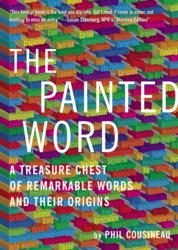
On the road with Phil Cousineau, author of bestselling The Painted Word, and host of PBS Global Spirit.

  • Share on TwitterShare on FacebookShare on Google+Share on LinkedInEmail a friend
The Painted Word
Quote startCousineau makes us Argus-eyed…you definitely need this book.
—Lemony SnicketQuote end
(PRWEB) September 25, 2012
Joseph Campbell described Phil Cousineau as a five-tool threat—a writer, photographer, filmmaker, editor, and teacher. As the great Huston Smith says, "Cousineau's love affair with words in contagious." From the medieval scourge of abbey-lubbers to the unpronounceable floccinaucinihilipilification (considered the longest English word by the Oxford English Dictionary) to the Maori ghost-word zzxjoanw. Cousineau will clear up the bafflegab and pandemonium, and remind you that you too are a philomath (or at the very least a Phil-o-phile). And don't miss Phil Cousineau's Global Spirit on PBS, described by series host John Cleese as "the world's only internal travel show." Listen to the audio book ofWordcatcher as well!
Join Phil at these events:
9/25: Boswell Book Company, Milwaukee - 7pm
10/4: Golden Notebook, Woodstock - 7pm
11/7: The Inside Edge, Irvine - 7am
11/7: Warick's, La Jolla - 7:30pm
11/8: Book Soup, Los Angeles - 7pm
11/9: Esalen, Big Sur
To untangle the knot of interlocking meanings of these painted words, logophile and mythologist Cousineau begins each fascinating word entry with his own brief definition. He then fills it in with a tint of etymology and a smattering of quotes that show how the word is used, ending with a list of companion words. The words themselves range from commonplace—like biscuit, a twice-baked cake for Roman soldiers—to loanwords including “chaparral,” from the Basque shepherds who came to the American West; words from myths, such as “hector;” metamorphosis words, like “silly,” which evolved “holy” to “goofy” in a mere thousand years; and words well worthy of revival, such as “carrytale,” a wandering storyteller.
Share on TwitterShare on FacebookShare on Google+Share on LinkedInEmail a friend

Monday, June 18, 2012

Excerpt of the Day: "The Lazy Gourmet" by Robin Donovan and Juliana Gallin


Let's face it, cooking can be intimidating.  We don't all have Thomas Keller's talent (not here), Martha Stewart's ingenuity (who does?), Gandhi's patience (nope), and Charles Manson's free time (yeah right).  But thanks to Robin Donovan and Juliana Gallin and their book The Lazy Gourmet, you don't need to be a classically trained chef to make creative and sophisticated meals.  With all these tips, tricks, and recipes, you're sure to please anybody.

Have a taste:

From the day the two of us met—as college students moving into a big drafty Victorian in Santa Cruz, California—we bonded over food. There were seven women living in the house, including science majors, banjo players, artists, and athletes. We were all very different, but the one thing we agreed on was food. We each contributed a set amount of cash to the food fund each week, and we took turns shopping and cooking dinner. Of course, we were barely out of our teens, and on student budgets, so the food was anything but fancy, but it was good enough to bring the seven of us—and a nightly assortment of friends, boyfriends, classmates, and random hangers-on—together around the dining room table most nights. There were, of course, plenty of frozen gnocchi and burritos, but there was also “homemade” calzone using store-bought pizza dough; a legendary rich, cream-based corn and tomato soup adapted from a recipe in the Moosewood cookbook; and one July evening, when turkeys were inexplicably on sale for an irresistible price, an entire Thanksgiving feast, complete with bread stuffing, green bean casserole, and pumpkin pie. At best, there were homemade pierogies from someone’s grandmother’s recipe. At worst there was a terribly misguided sauté of nopales (Mexican cactus) that, to our dismay, even half a bottle of soy sauce couldn’t save.

While we shared food costs and cooking duties—and a love of eating—our culinary knowledge was anything but equal, with Robin and Juliana toting opposite ends of the line. Robin, on the one hand, grew up in a food-obsessed family where the primary topic of dinner table conversation was where and what the next meal would be. Having grown up watching (and helping) her mother, a professional restaurant critic and accomplished cook, prepare dinner each night, cooking came naturally to her; she was simply comfortable in the kitchen, not intimidated by complicated recipes or exotic ingredients.

While Robin inherited her mother’s kitchen prowess, Juliana, in contrast, cruised through childhood blissfully delighted when meals magically appeared in front of her. While she did master the Toll House cookie at a tender young age, she was generally more interested in eating than cooking. Pringles, candy bars, and four-star meals were all welcomed with equal enthusiasm. Frankly, she never gave cooking much thought until early adulthood, when she was ready to start preparing meals for herself and others. She was beginning to develop an appreciation for good food, but chalked the gourmet cooking abilities of others up to innate magical powers that she simply wasn’t lucky enough to possess. She watched with bemusement as friends like Robin took seemingly random piles of meat and produce, mysterious powders and liquids and transformed them into feasts that caused awestruck guests to burst into spontaneous applause. She wanted to be able to impress friends with dinner party spreads they would still be talking about months later, but she was resigned in the belief that she wasn’t cut out to be a cooking whiz.

After college, Robin worked at a series of day jobs in the book publishing industry, and devoted the majority of her spare time to indulging her foodie urges. She devoured food magazines and television cooking shows, took cooking classes, and mastered complicated techniques. Both zealous and disciplined, she became known for her willingness to spend an entire week before a dinner party infusing oils, brining meats, and scouring markets throughout the greater San Francisco Bay Area in search of just the right ingredients. Eventually, she justified this devotion (read: obsession) by becoming a professional food writer, finally getting paid to ferret out delightfully minute culinary details for magazine and newspaper articles and develop recipes for her own cookbooks.

Juliana became a graphic designer and continued to passively enjoy the stellar culinary offerings of the San Francisco Bay Area. While part of her always coveted her friends’ cooking know-how, she couldn’t imagine putting in the time, energy, and training she thought would be required for her to learn to cook great food. Eventually, though, it began to dawn on her that some of the most elegant, beautiful, and memorable meals she encountered—those that made foodies swoon, squeal, and beg for recipes—were also some of simplest. A surprising combination of unlikely ingredients, the use of fresh herbs, or a dash of a special vinegar or infused oil were often the things that elevated a meal from decent to stunning. After years of befuddlement and self-doubt, Juliana had finally discovered a startling concept that changed the way she approached the kitchen: cooking great food can be really easy.

Over the years, the two of us frequently crammed ourselves into one or the other of our tiny, ill-equipped San Francisco apartment kitchens to cook and eat. As our lives became increasingly complicated and busy, more and more we both found ourselves looking for kitchen shortcuts that wouldn’t force us to skimp on flavor. We’d make excited phone calls or send urgent late-night emails to share new recipes for super delicious dishes, recipes that were “so easy!” Some of those recipes became legendary for us, like the ridiculously simple balsamic syrup that could transform the most mundane ingredients into culinary nirvana on a plate, or the egg and asparagus sandwich that earned one of us such a reputation at her workplace that we now refer to it as “THE sandwich.”

Wednesday, June 13, 2012

Excerpt of the Day: "The Inspired Life" by Susyn Reeve and Joan Breiner


In need of an inspiration pick-me-up?  Look no further!  Susyn Reeve and Joan Breiner’s The Inspired Life is filled with definitions, quotes, life stories, exercises, and meditations meant to open your mind to the creative potential in every moment of daily life.

Here’s an excerpt:

“Our Invitation to You”

There have been many names for and descriptions of the times we are living in. Some consider this to be a New Age, others the Age of Aquarius. To some it is the End Times with doomsday quickly approaching. Some believe the end of the Mayan calendar is simply an astronomical occurrence while others define it as the end of civilization as we know it; still others say while it marks an end, it is a gateway to a new beginning of peace and cooperation among all peoples.

Charles Dickens’s words from his classic novel continue to ring true today.

The worst of times: When watching and listening to news reports it becomes clear that there is currently much strife and cruelty in the world: war, genocide, ethnic cleansing, the stoning of women, which always amazes me since the ones hurling the stones were birthed through the bodies of women—their mothers. Economic conditions throughout the world are worse than they have been in decades. The divide between the rich and the poor widens daily as the middle class disappears. Children are starving throughout the world while the military budgets of nations get larger and larger. In the United States partisan politics is so focused on who is “right” and who is “wrong” that it seems that issues—even the role and purpose of government itself—get lost in the desire to win elections. Corporate greed and government scandals fill the airwaves and leaders are not trusted. News pundits weave stories of fear and terror as their nightly offering. Natural disasters seem to be rapidly increasing. Is the current recurrence of bedbugs a plague in our midst? Hate crimes based on gender, race, ethnicity, sexual orientation abound. Not only is there hatred among racial and ethnic groups throughout the world, families can’t even get along.

The best of times: Since the first photograph, the famous “Blue Marble,” in which Earth is in full view was taken on December 7, 1972, as the Apollo 17 crew left Earth’s orbit, there is no doubt that we are One—one humanity on one planet. Since that time, our inter-connectedness and inter-dependence has been made more and more evident through the Internet via Twitter, Facebook, and blogs, which offer instant access to social networks and worldwide communities (and playing a significant role in the call for democracy in the Middle East); the global economy and the resources and support that are readily offered, not only by governments, but also by people throughout the world within hours of reports of disasters. Advances in research have provided life-saving procedures and remedies. Educational opportunities abound. There is a global movement afoot honoring Mother Earth, our true home. Green industries are becoming mainstream. At the same time the evolution of consciousness continues with more and more people committing to live Gandhi’s words, “Be the change you wish to see in the world.” Individuals and groups are reaching across borders and boundaries in the name of peace. Women throughout the world are stepping forward committed to peace and our voices are growing and the fruits of these labors are being felt.

Katherine Woodward Thomas and Claire Zammit lead “Calling in the One” and “Feminine Power Mastery” tele-classes with thousands of participants representing more than fifty countries worldwide. In these programs, women and men in a community of support declare their commitment to live their inspired life visions, to be love made manifest in their relationships with themselves, their families, and their local and global communities.

Whatever you may believe, isn’t now the time to enrich your life by affirming and committing to your inspired life vision? At the very least, living your vision offers you the possibility of greater joy, fulfillment, and happiness. And, at best, as you put your stake in the ground for living a more peaceful and loving life, your consciousness generating your actions contributes to the collective consciousness of the Greater Field of Life, and love grows and peace expands for all.

Monday, June 11, 2012

Excerpt of the Day: "Lemons and Lavender" by Billee Sharp


Looking to save money and remain eco-friendly?  Meet Billee Sharp and her fabulous book Lemons and Lavender!  Packed with tips, recipes, and advice, this handy how-to will help you save the planet and your pocketbook.

Interested?  Here’s a peek of what’s inside:

Most of us are searching for the good life. What constitutes a “good life” is obviously subjective, but our quest to find happiness directs each of our lives in unexpected ways. When I think of personal happiness, security and fulfillment immediately come to mind. We all want the means to realize our hearts’ desires, but it is perhaps these desires that need to be reexamined. As a society, we’ve recently learned the hard way that we often want more than we can afford: our overextended credit system and failed subprime mortgage market have led our economy to a near collapse.

Twenty-first-century life affords us a unique perspective on the world we live in. We are hyperconnected to the rest of the globe, and we are all too aware of the ecological and economic crises that beset contemporary life. We can see that our daily actions have very real repercussions, and what we do as individuals shapes our world both literally and figuratively. We now have an opportunity to take our vision for humanity more seriously.

Slowly, we are acknowledging that the earth does not have the capacity to meet our unrepressed appetites, and that to end the destruction of our environment and the suffering of millions, we have to want less individually. 

Our emotional well-being is connected to how much money we have; while it is wretched and distracting not to have enough money to pay the bills, there are also pressures and worries that come with having plenty.

As Duane Elgin notes in his book Promise Ahead,

For many, the American Dream has become the soul’s nightmare.
Often, the price of affluence is inner alienation and emptiness. Not
surprisingly, polls show that a growing number of Americans are
seeking lives of greater simplicity as a way to rediscover the life of
the soul.

How do we adapt our life expectations accordingly? For me, the desirability of a $7,000 designer handbag evaporates when compared to the number of people that sum could feed. The carbon offsetting system—where individuals calculate their carbon expenditure and try to lower their carbon footprint—is an initiative that shows how seriously we take our situation.  Likewise, the growing support for fair-traded goods in commercial markets is evidence that mainstream society is beginning to show more compassion for the people who make and grow our food.

Quite literally, how we see the world has changed. In 1966, with the question “Why haven’t we seen a photograph of the whole earth yet?” Stewart Brand initiated a public campaign for NASA to release the satellite image of our planet from outer space. His argument was that the image would be a powerful symbol for humanity, and he was right. Our visualization of the world was changed with our access to this image, and this parallels the dramatic reconfigurations that have transformed Western society. We now have legislation that prohibits discrimination based on color, gender, and religion. Popular opinion and our evolving global consciousness give us hope that humankind can peacefully coexist with one another and with the earth.